

Thirteenth (13th) Stepping
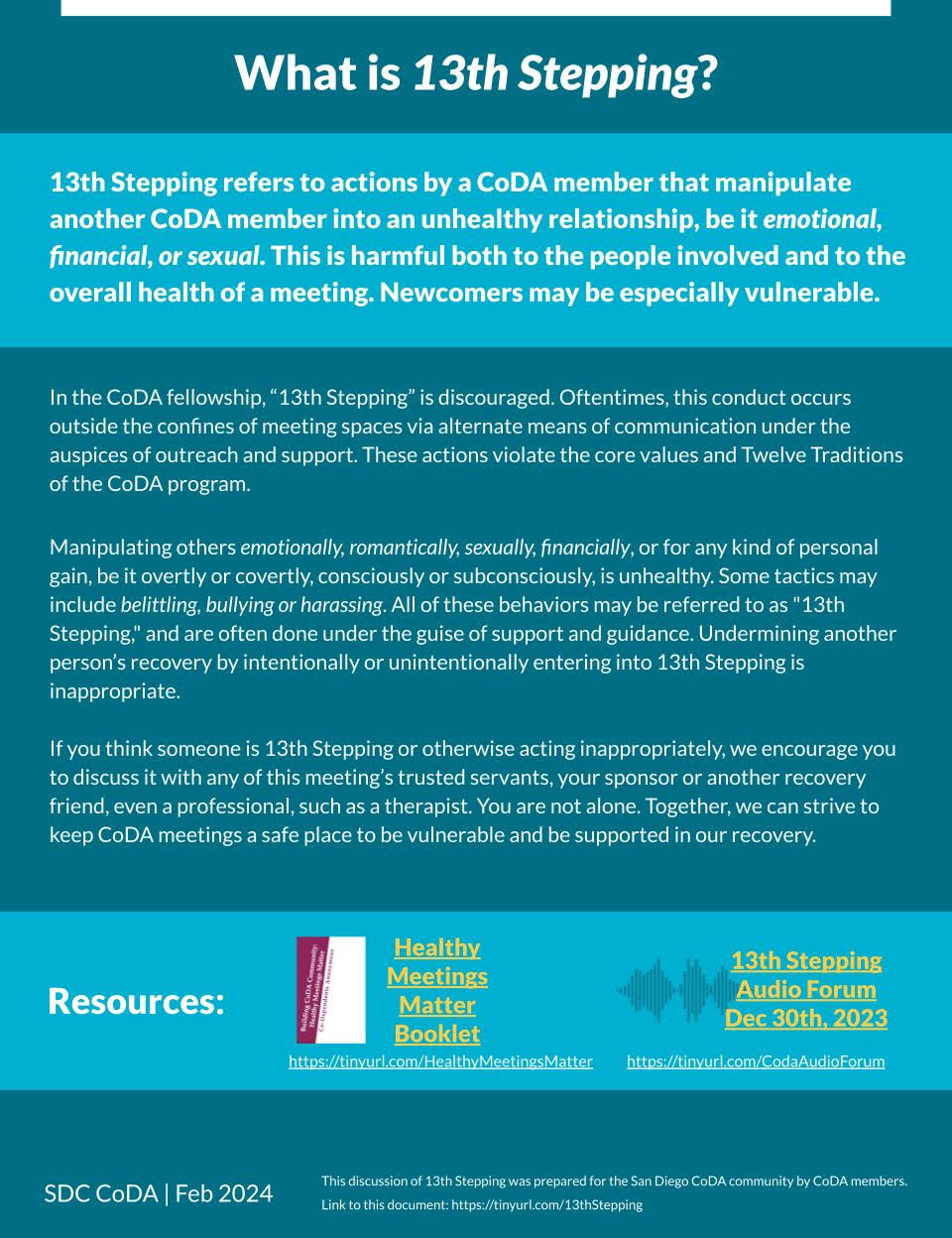
Click on the image to view and download the flyer.
What is 13th Stepping?
“This term originated in several other Twelve Step programs to describe unhealthy and inappropriate sexual behaviors that take place within the Fellowship. One person could be taking advantage of another when he or she is in a vulnerable or painful spot, or someone may be using a nurturing hug for sexual gratification. It could apply to sexual innuendos or sexual joking to control, embarrass, or subtly negotiate sexually with another. Thirteenth Stepping also occurs in meetings when members flirt, dress inappropriately, or attend just to find dates. “In an attempt to approach the subject without shame or blame (because many people are unaware of these behaviors), some members of the Fellowship make announcements or engage in discussions concerning Thirteenth stepping and the potential damage it can cause. Whether we’re engaging in inappropriate behaviors, receiving, or witnessing them, we must all work together to create and maintain CoDA meetings where the members can feel safe to be vulnerable, share their thoughts and feelings, and receive support for their recovery without manipulation or control.”
— Co-Dependents Anonymous ‘Big Book’ (3rd Ed.), p 103.
“Thirteenth stepping is harmful to both people involved and to the overall health of a meeting. Newcomers may be especially vulnerable. Although the primary responsibility for addressing this issue lies with the individuals involved and their sponsors, any member who is aware of thirteenth stepping may speak privately with the person perceived to be engaging in this behavior. Another option is to call for a group consciencse at the next business meeting. People may express their discomfort using “I” statements and without naming individuals or pointing a finger.”
— from Building CoDA Community: Healthy Meetings Matter (April 2009), p. 12
Some of the codependent traits make codependents especially vulnerable to 13th stepping. Codependents often:
● Have difficulty identifying what we are feeling
● Minimize, alter, or deny how we truly feel.
● Perceive ourselves as completely unselfish and dedicated to the wellbeing of others.
● Lack empathy for the feelings and needs of others.
● Value others’ approval of our thinking, feelings, and behavior over our own.
● Do not perceive themselves as lovable or worthwhile persons.
● Compromise our own values and integrity to avoid rejection or anger.
● Put aside our own interests in order to do what others want.
● Are hyper-vigilant regarding the feelings of others and take on those feelings.
● Are afraid to express our beliefs, opinions, and feelings when we differ from those of others.
● Accept sexual attention when we want love.
● Make decisions without regard to the consequences.
● Have to feel needed in order to have a relationship with others.
● Demand that our needs be met by others.
● Use blame and shame to exploit others emotionally.
● Use recovery jargon in an attempt to control the behavior of others.
● Use indirect or evasive communication to avoid conflict or confrontation.